I built a $10M+ Amazon portfolio using this exact system. I'm giving it to you for free. Every step, every tool, every screenshot from real research sessions.
I started selling on Amazon with $3,000 and zero experience. No connections. No mentor. Just Google, YouTube, and a lot of expensive mistakes.
After 9 years in e-commerce I built a portfolio that does 8 figures a year. Along the way I lost $40K on my first product, got my account suspended twice, and almost quit.
The system you're about to learn is everything I wish someone had given me on day one. It would have saved me over $60,000 in bad product choices and 14 months of going in circles.
I'm sharing the exact steps, the exact tools, and the exact spreadsheets I still use today. With real screenshots from real product research sessions.
Follow all 5 steps and you will have a validated, profitable product idea by the end of this week.
Let's go. — Dima
How to see what 99% of sellers are blind to
Don't be afraid of making mistakes. They are just ways to start seeking ideas again. Your goal is to find as many product ideas as possible. The goal is to find areas where other people are not looking. Look for anything that catches your eye: an unusual product name, interesting packaging, something you've never seen before. Your goal is to find an idea to "hook onto" and explore further.
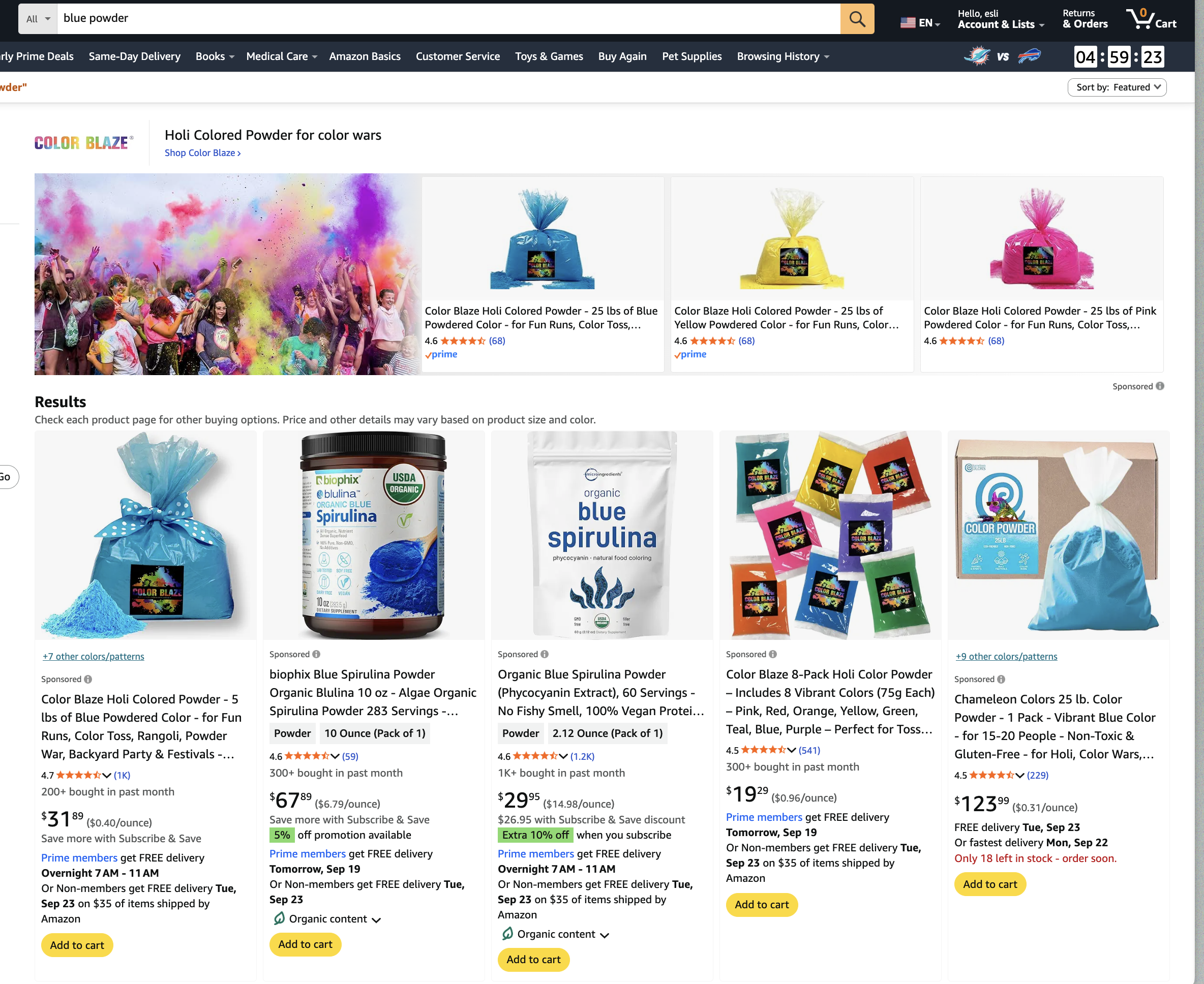
Take a random combination: a color + a product category. Search it on Amazon. You will find products you never knew existed. That's exactly the point.
Example: We searched "brown + pills" and found Brown Seaweed Capsules. Then we tried "blue + powder" and discovered Blue Spirulina, a completely untapped niche.
Found one interesting product? Amazon will suggest adjacent niches for you. Click on the first product and look at what's bundled with it. Each suggestion is a new idea you didn't think of.
Found an interesting product? Click on the seller's name and visit their store. Look at what other products they sell. This is one of the most powerful ways to discover new ideas, because successful sellers already did the research for you.
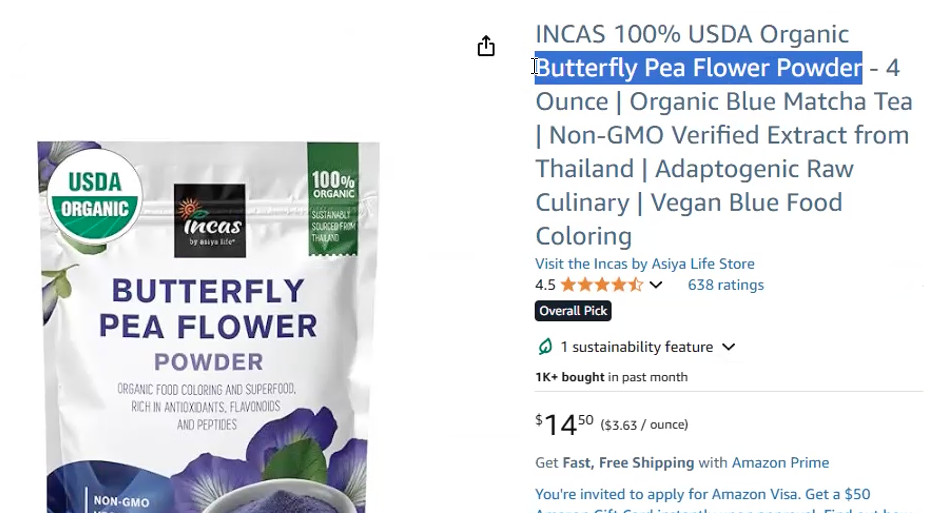
By looking at the Blue Spirulina seller's store, we found another product: Butterfly Pea Flower Powder. That became our main case study for this entire system.
Use Google Trends, ChatGPT, and TikTok for searching outliners. Example: Google "most used search terms in [category]." You will find growing trends that aren't saturated yet.
There is no magic tablet. The more time you spend looking at products, the faster you will see opportunities. Just do 5, then 7, then 10, then 15, then 30, then 50, then 100 product searches. Volume is everything at this stage.
A list of 10 to 15 product ideas ("hooks") ready for the next step. Don't overthink it. Quantity beats quality at this stage. Write down everything that catches your eye.
You now have 10 to 15 ideas. That feels great. But here's the trap: 90% of these ideas will lose you money. You need a way to kill bad ideas fast, before they kill your bank account. That's what the next step does.
How to eliminate bad ideas in 15 minutes using free data
The main keyword is the most important search term for your product. We need it to find our competitors and evaluate the niche. You can usually find it in the product's title. For our example, the main keyword was "butterfly pea flower powder."
Use Sellerise Keyword Hunter or Helium 10 tool to research keywords.
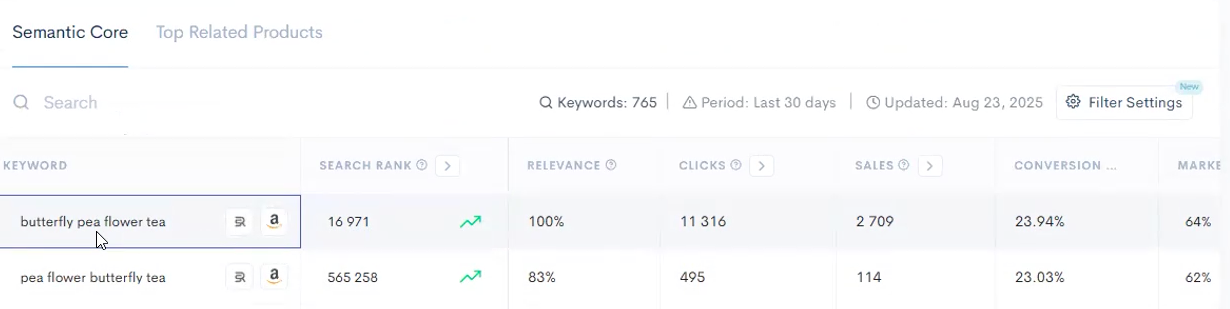
Search rank: lower is better. Target: below 20,000. Also make sure relevance is high.
Check if there are other strong keywords. For example, "butterfly pea flower tea" was also a big keyword. That means the product can be sold to two completely different markets. This doubles your reach.
Also check sales by keyword to evaluate if you can compete by organic sales and USP.
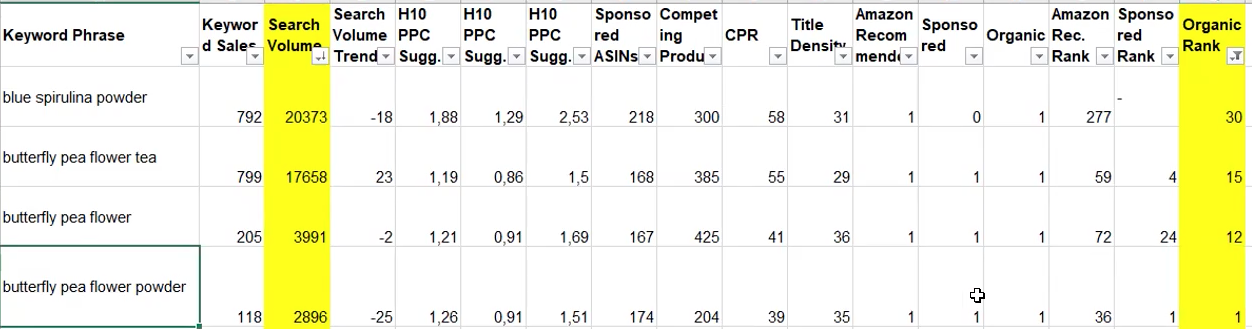
We need around 20 competitors on the first page to evaluate how we can compete and how much money we need. We check keywords search volume (how many people search for that product), what place competitors took in organic search, and how many people sell on that keyword. Finally, we find the keywords that we will use in the product launch.
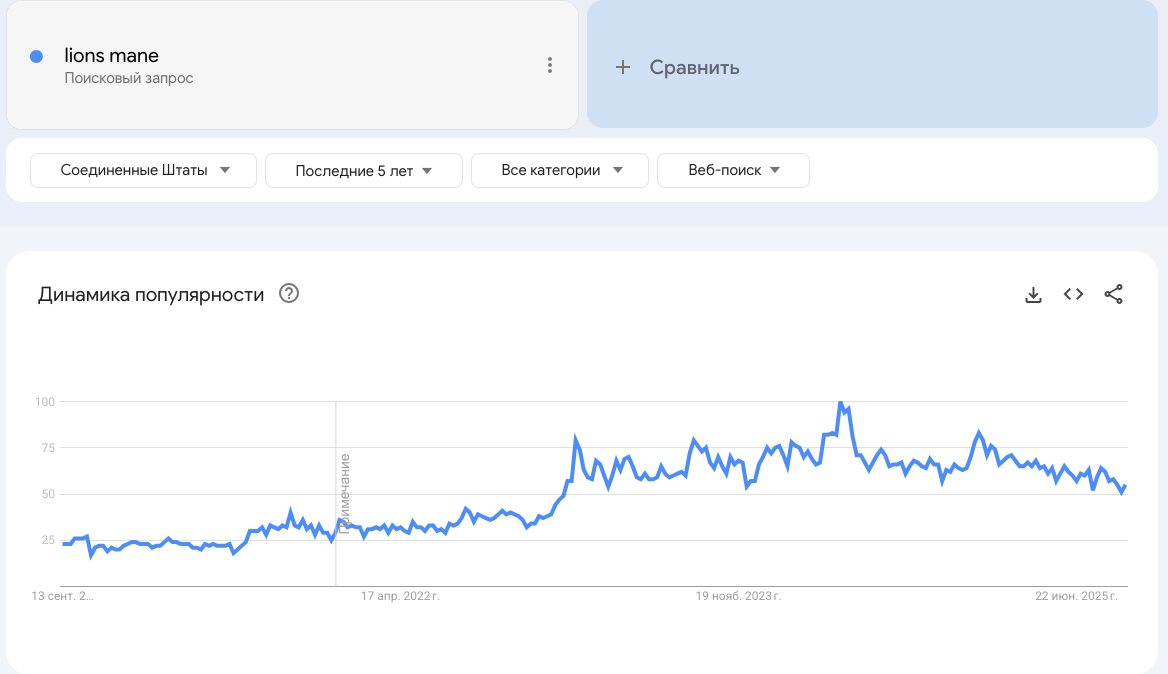
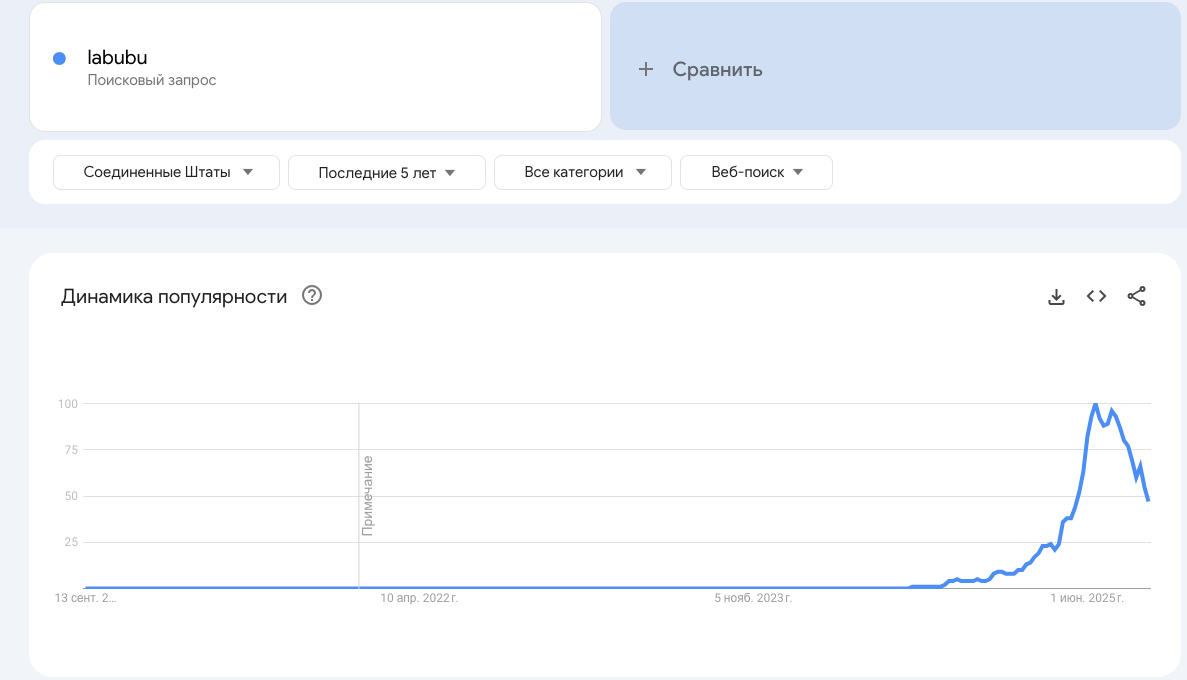
Seek a stable or growing trend. Avoid products that are just short-term "hype" that will die down quickly. This is one of the simplest steps, and it saves people from making the most expensive mistake: launching a product that's already fading.
3 to 5 validated product ideas with data that passed the checklist. You've killed the weak ideas. The survivors are ready for a deeper look.
Your list is now down to 3 to 5 strong candidates. The data says the market exists and is growing. But data only tells you there's a pie. It doesn't tell you if you can get a piece of it. The next step answers that question. And getting it wrong here costs $15,000 to $30,000.
How to know if you can win BEFORE you spend a dollar
Before you go deep into analysis, do a quick budget check. Low budget (under $15K)? Stick to small niches with max 1,000 sales per month. Big budget ($200K to $300K)? You can go after big niches.
Calculate the average monthly sales times 3 to get the needed quantity, then multiply that by the cost per item to find total production costs. This tells you if the niche even fits your wallet.
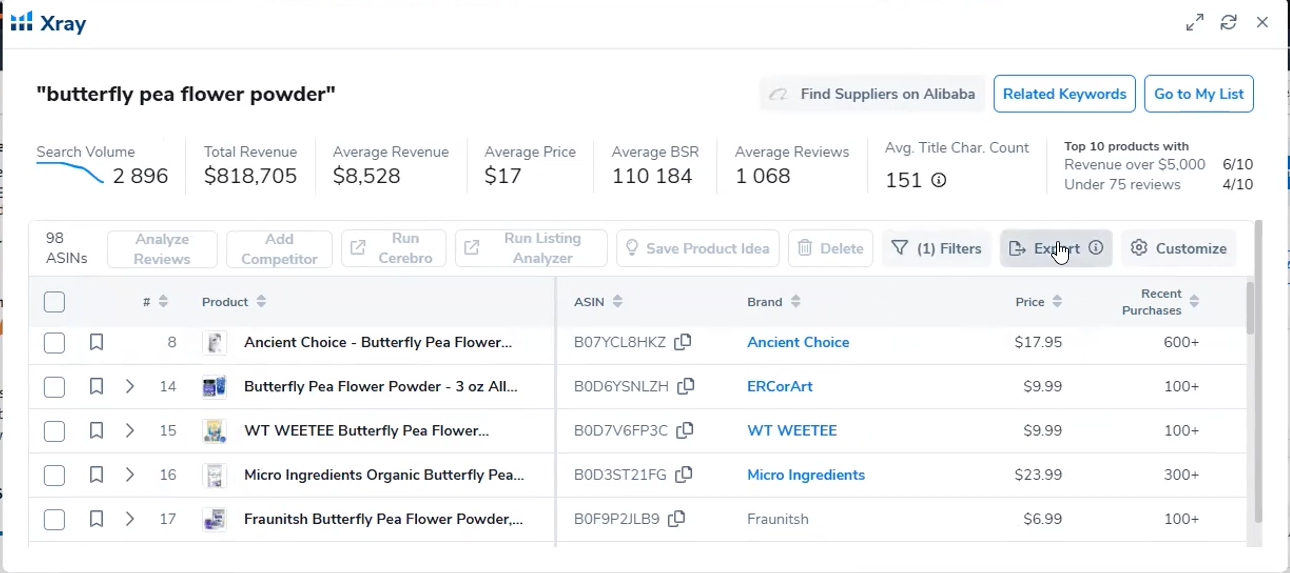
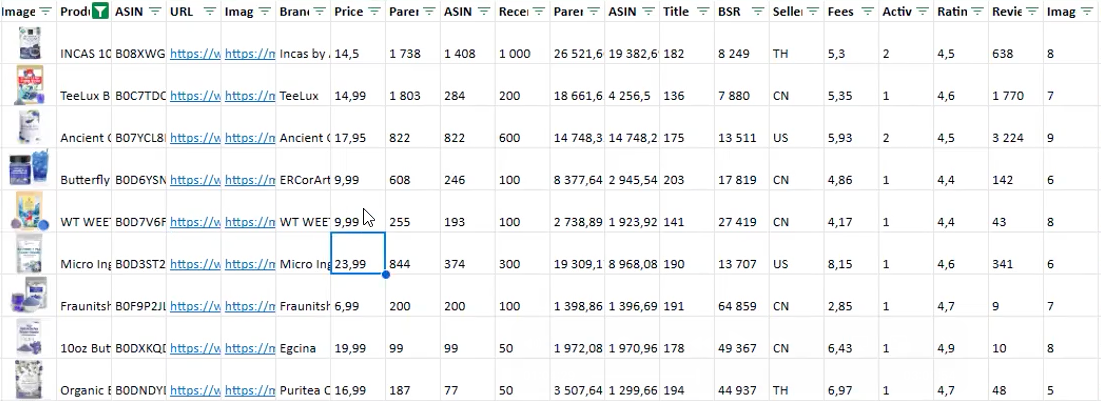
Use Helium 10 X-Ray on the search results page for your main keyword. This will give you a table with all your competitors' data. We hide sponsored products in filters and export everything to a spreadsheet.
We evaluate everything: prices, volume, package size, reviews, fees, whether sellers are US or CN based.
Here we can see a seller with high sales and a low number of reviews. This is a very good sign. It means customers care more about the product than the seller's reputation. You can compete even with zero reviews.
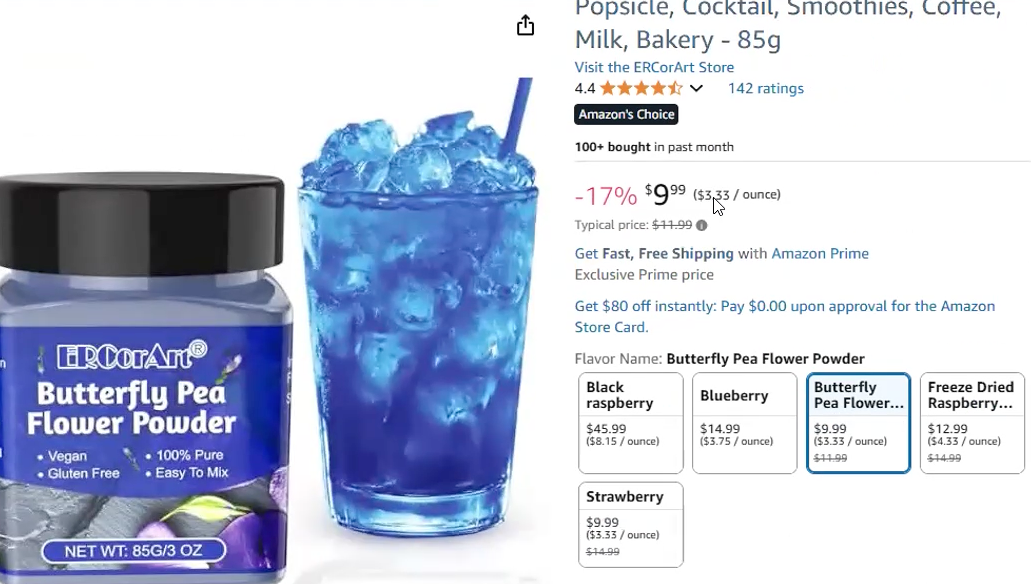
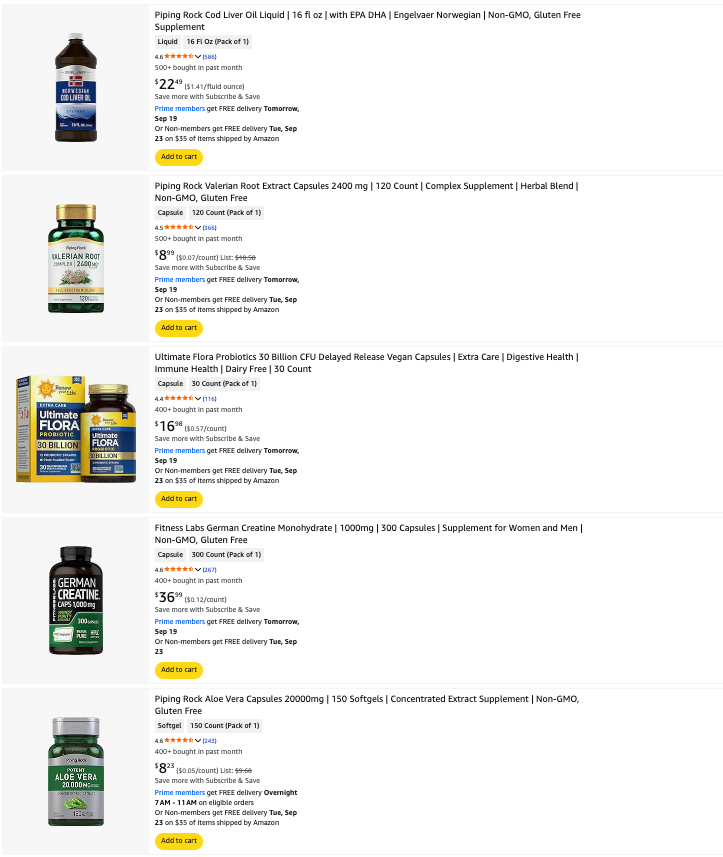
Do the designs look old or unprofessional? If yes, this is a great opportunity for you. Many sellers have bad, old designs. This is a chance to win with better branding. Just look at the screenshot below.
Copy Good Ideas: Apply successful design ideas from one category to another. Something that works great in skincare might be completely new in supplements.
Everyone sells jars without a box. A product in a box looks more premium and gets more clicks. We noticed that sometimes adding a box to the main image improves CTR by 2 times.
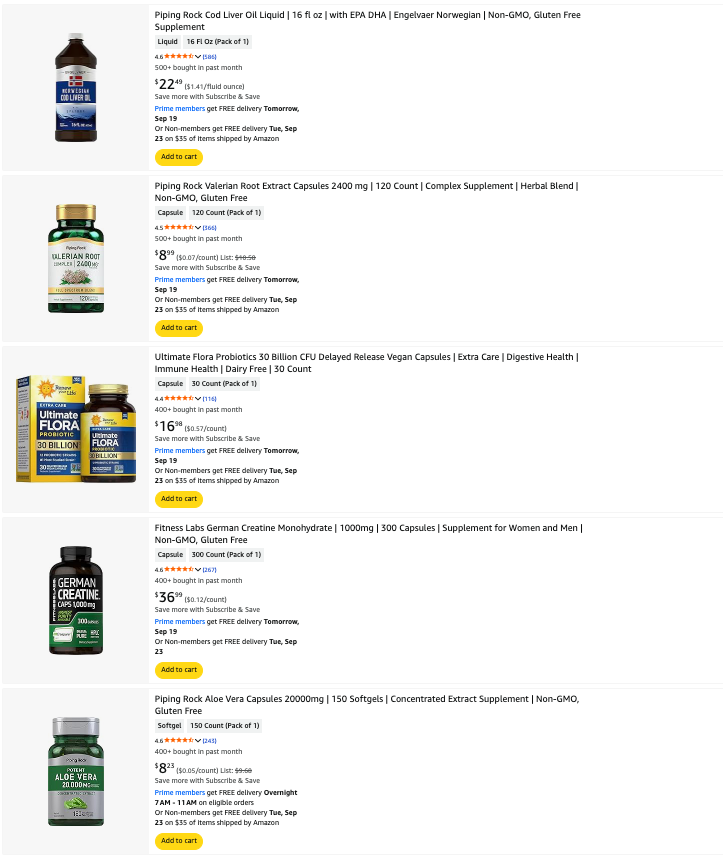
Ask yourself: all jars are black or white. Why? Can we make it a different color? Can we add a gold lid? You should ask such questions about every idea.
What is the average price? Can you sell your product for a similar price and still make a profit? If the average price is $15 and your COGL+SHIP is $4.70, you're looking at a potential 33%+ margin. We will show how to calculate it in detail in Step 5.
Check if the top sellers are big brands that spend a lot of money on ads outside of Amazon (like on Facebook or TikTok). If they do, it will be harder to compete because they have a lot of "brand traffic" that you don't have.
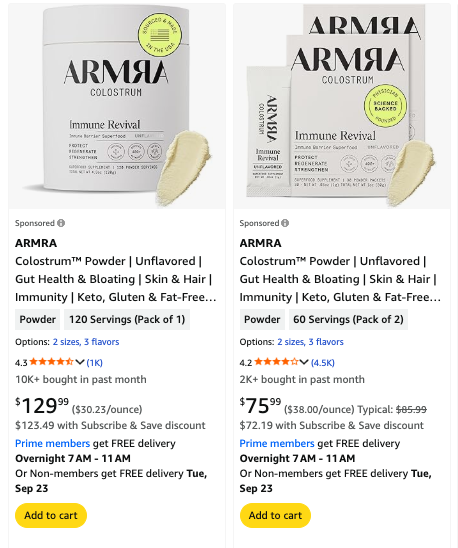
Look at the example below: a brand with high brand traffic and terrible Amazon strategy (4.2 is very bad rating!). They survive on external traffic alone. Competing with them requires a different approach.
Check how sales are distributed between positions 1, 2, and 3. If position #1 has 1,025 sales and position #3 has 166, it's concentrated and one seller dominates. If it's more even (413 / 307 / 243), it's much easier to break in.
This rule won't work with big brand traffic competitors, so in that case we target on sales with keyword only.
1 to 2 products that passed all 6 signals. These are your strongest candidates. They have the volume, the weak competitors, and the entry point. Now you need a strategy to win.
You've found a niche where you can compete. Now comes the question that separates sellers who make $2K per month from sellers who make $20K per month: how do you make your product impossible to ignore on page 1?
A bulletproof system how to win them all
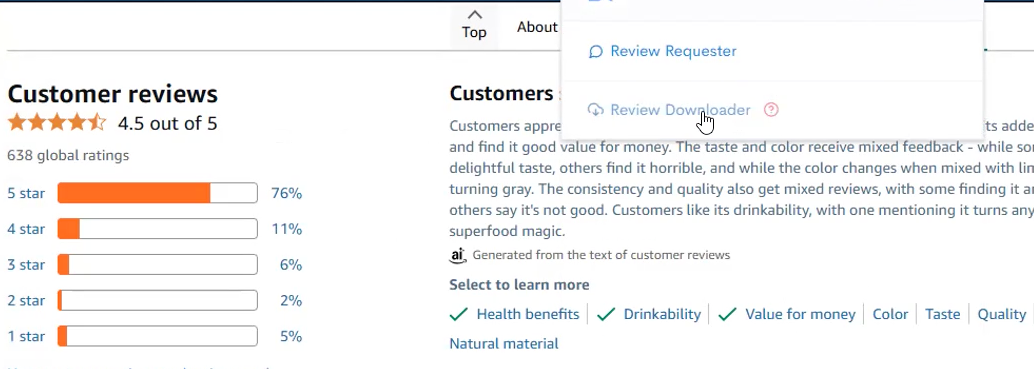
Download competitor reviews and use AI (like ChatGPT) to find what customers love and what they hate. This becomes your product roadmap. Use Sellerise Review Tool or voc.ai for analyzing your competitors at scale.
Unique Feature Hack: Find something no one else has. If no one is selling an "Organic" version, you can be the first and become a top seller. One word in the title can change everything.
Everyone sells 4oz? Launch a 16oz or 32oz version. American customers often like to buy in bulk.
The 3-Size Strategy: A small, cheap one (to try). A standard medium one. And a large one (best value). This helps you attract all types of customers and dominate the "variations" section of the listing.
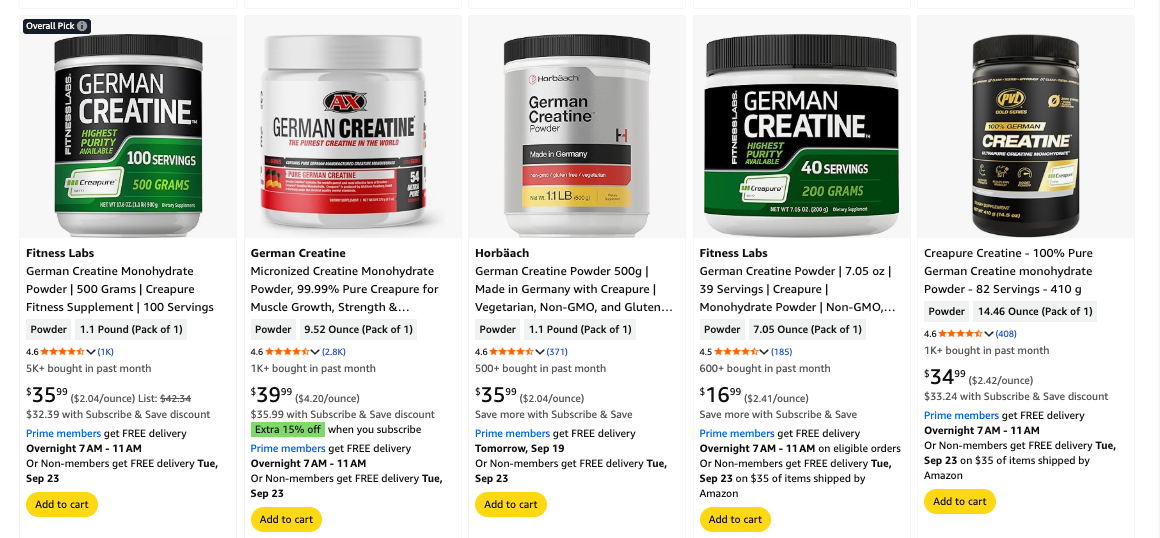
Stand out. Use bright colors and unique shapes. If every competitor has a white jar, make yours colorful. Look at the screenshot below. All jars look the same. Your eye doesn't stop on any of them. Be the one that stands out.
Use premium details: add a box or a gold lid. We noticed that sometimes adding a box to the main image improves CTR by 2x. Consider packaging format: pouches vs jars vs boxes.
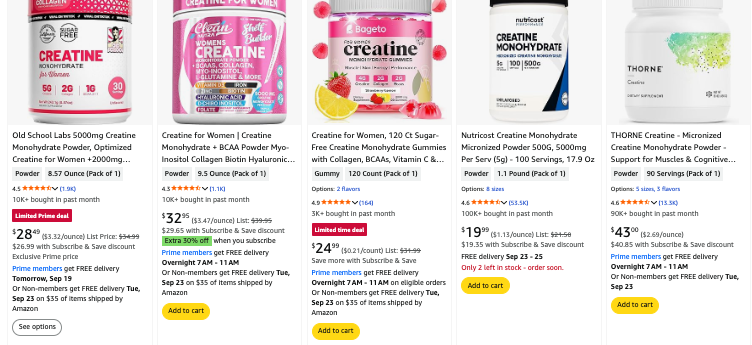
Women's products in male-dominated niches = explosive growth. Creatine is a "men's" category. But "Creatine for Women" is booming. Same product, repositioned for an underserved audience, premium prices.
A complete USP Blueprint: what you're doing with the product, what size and variations you will offer, what the design looks like, and which demographic you're targeting. This is the blueprint for your entire launch.
Your product strategy is ready. You know what you're selling, how it looks, and who it's for. But none of that matters if the math doesn't work. This is where 80% of new sellers blow up. They skip the numbers, order 3,000 units, launch, and 3 months later discover they're operating at 5% margin. The next step makes sure that never happens to you.
The exact math that tells you GO or NO-GO before you risk a single dollar
Look for a factory on Google, Alibaba, 1688.com, or at trade shows. Each platform has a different approach.
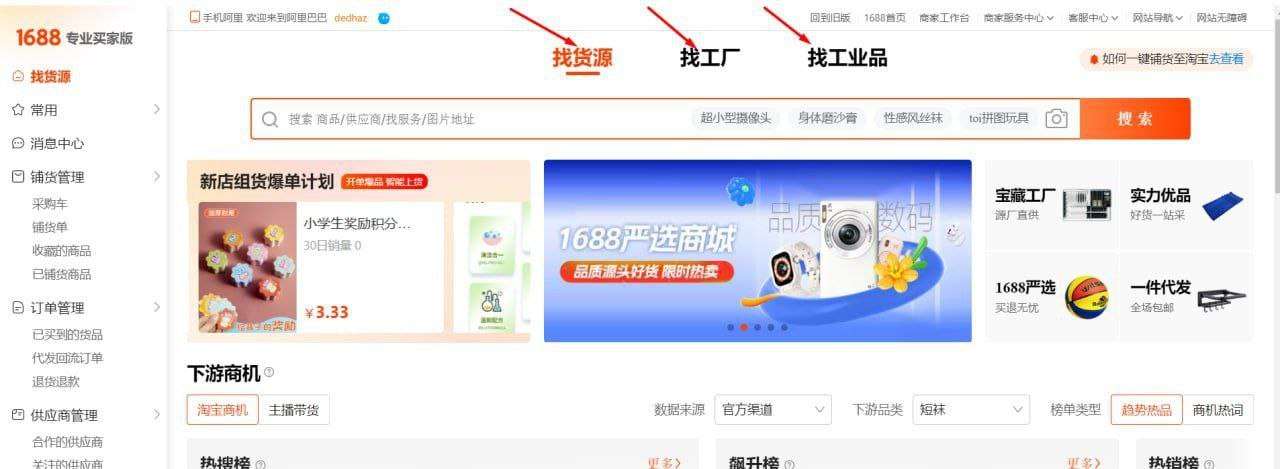
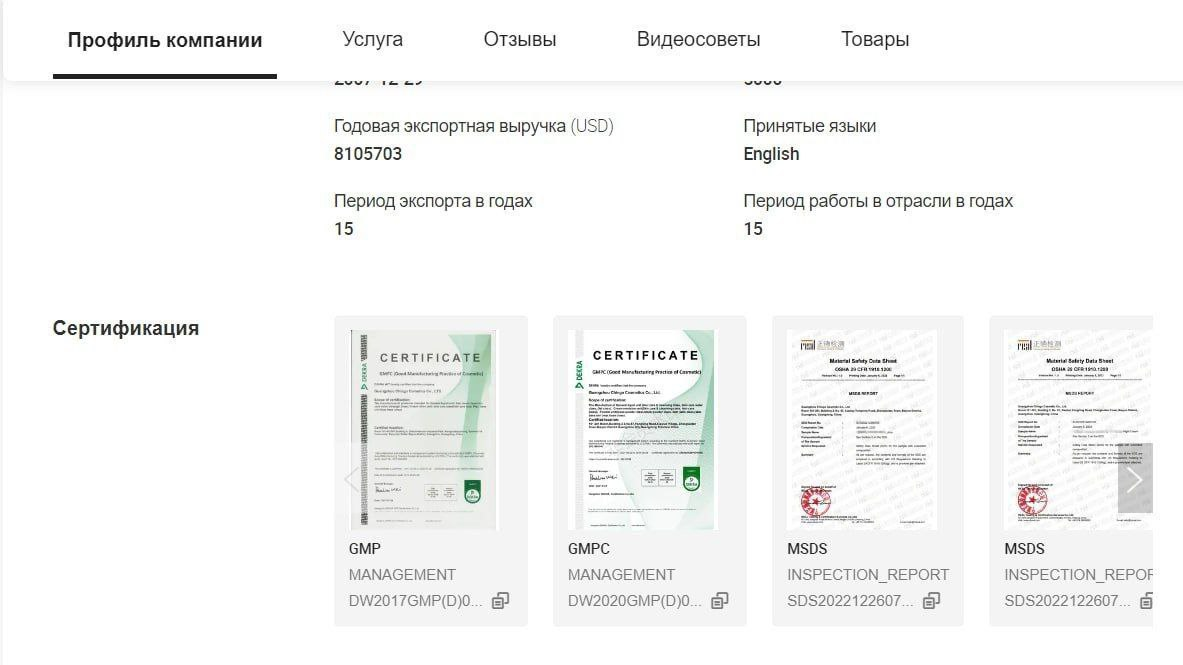
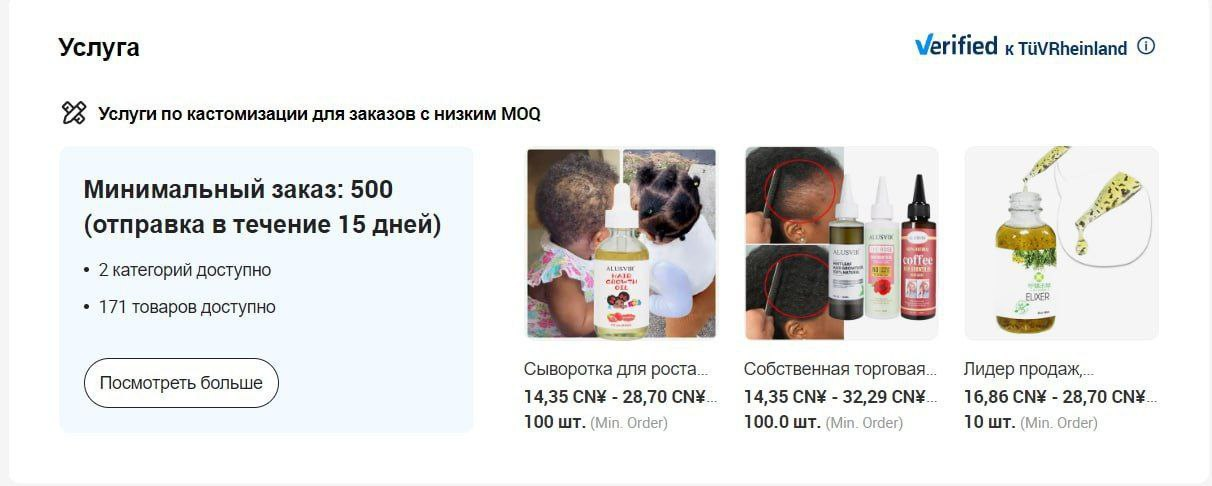
You can filter by certifications: ISO, GMP, GMPC for supplements. Check production details and MOQ carefully.
Pro tips: Simply ask ChatGPT for top suppliers in your niche. They won't all be in the US, and sometimes it's cheaper to order a contract supplier. For supplements specifically, check ASAP Nutrition (asapnutrition.us).
When you find your first suppliers and contact them, make a screenshot and we'll give feedback.
Find out your product cost (cost of goods) and fill the idea spreadsheet with all candidates. This helps you compare options side by side and make a data-driven decision.

Use the Amazon FBA Calculator to get exact packaging and logistics costs. Target: profit margin above 33%.
Calculate here: sellercentral.amazon.com/hz/fba/profitabilitycalculator
Plan your launch budget for 3 to 4 months, including inventory, design, and advertising.
Our rule of thumb: When we were newbies, we evaluated that we can sell approximately 30% of our reference sales target. If it was suitable, we launched. Now, with experience, we target 80% to 100% of our reference within 3 months.
Here's a real example. Actual numbers, month by month, dollar by dollar. Based on my subjective niche assessment, I expect to easily reach top 2 within 6 months through my variations and design. Calculations with our template show expected breakeven in 3 months.
Filling only the white pieces in the template. Details below:
Open the Google Sheets Template →
| Month 1 | Month 2 | Month 3 | Month 4 | Month 5 | |
|---|---|---|---|---|---|
| Revenue | $3,897 | $8,394 | $14,990 | $17,988 | $20,986 |
| Units Sold | 300 | 600 | 1,000 | 1,200 | 1,400 |
| Organic Units | 120 | 300 | 600 | 840 | 980 |
| Daily Units | 10 | 20 | 33 | 40 | 47 |
| Ad Units % | 60% | 50% | 40% | 30% | 30% |
| CPC | $1.94 | $1.70 | $1.50 | $1.21 | $1.21 |
| PPC Conversion % | 10% | 11% | 13% | 15% | 15% |
| PPC Revenue | $2,338 | $4,197 | $5,996 | $5,396 | $6,296 |
| PPC Budget | $3,492 | $4,636 | $4,615 | $2,904 | $3,388 |
| ACOS | 149% | 110% | 77% | 54% | 54% |
| TACOS | 90% | 55% | 31% | 16% | 16% |
| Other Marketing | $5,500 | $5,000 | |||
| First Batch | $14,570 | ||||
| AVG Price | $12.99 | $13.99 | $14.99 | $14.99 | $14.99 |
| COGL+SHIP | $4.70 | $4.70 | $4.70 | $4.70 | $4.70 |
| FBA Fee | $3.15 | $3.15 | $3.15 | $3.15 | $3.15 |
| Referral Fee | $1.95 | $2.10 | $2.25 | $2.25 | $2.25 |
| Refund Rate | 3% | 3% | 3% | 3% | 3% |
| Profit per Unit | -$8.63 | -$3.86 | $0.10 | $2.29 | $2.29 |
| Margin % | -66% | -28% | 1% | 15% | 15% |
| Profit/Month | -$2,588 | -$2,318 | $98 | $2,752 | $3,210 |
| Monthly Payout | -$1,178 | $502 | $4,798 | $8,392 | $9,790 |
Every number in the model above is based on a specific assumption. Here's how to validate each one so your model reflects reality.
Total Units to Buy: Setting my 6th month sales target at 1,500 units (slightly below top competitor). 1st month is roughly 20% of month 6 volume, with gradual 20% monthly growth until hitting 1,700 units at 12 months.
Ad Spending: Stays constant with low-price strategy. You can copy my percentages. This will give a similar ratio of ad sales to organic sales.
CPC Estimation: Take from Helium 10 (used H10 in this specific case, screenshot below). Adding bold 50% to this figure for first month, then CPC gradually decreases by months 3 to 4.
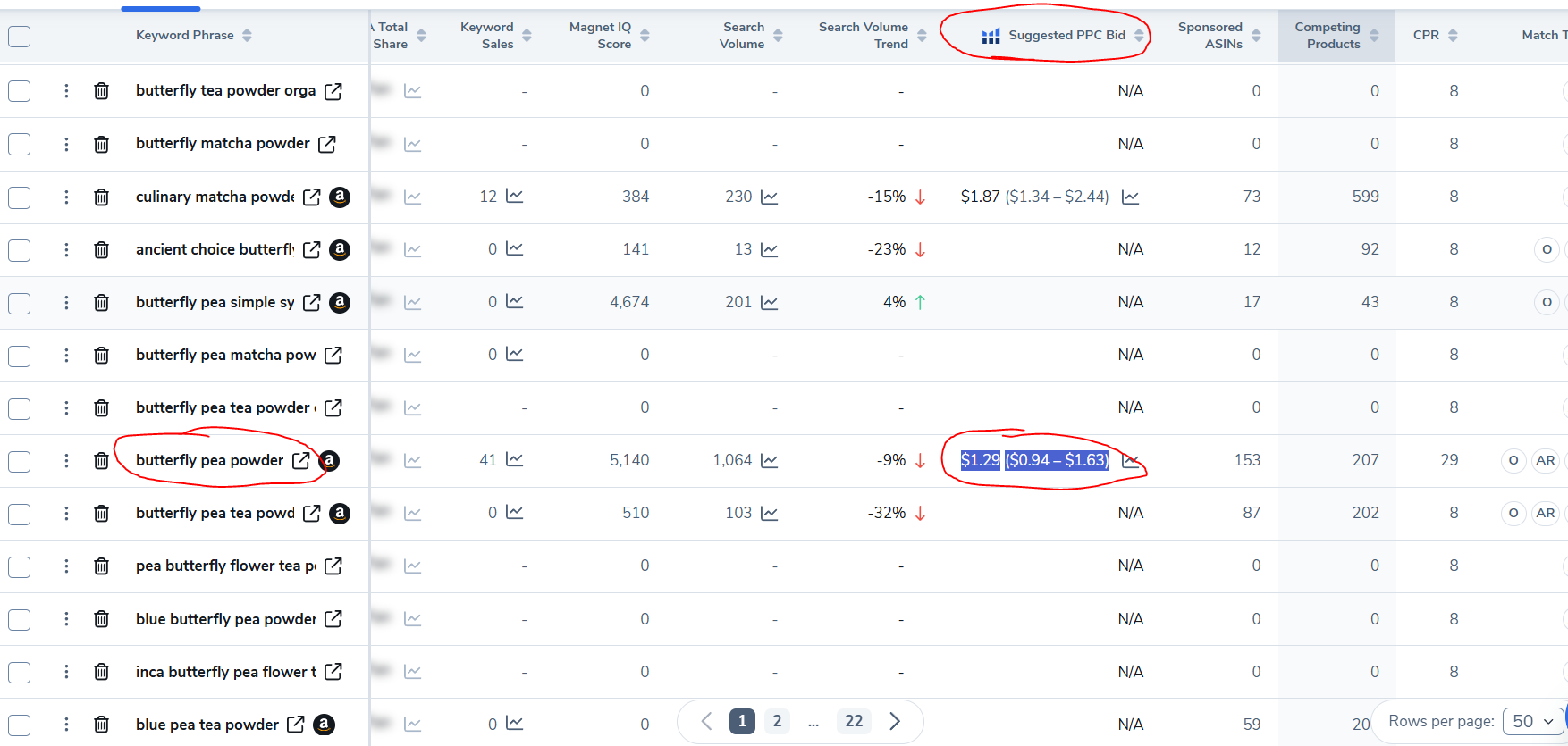
PPC Conversion: Very fluid parameter depending on where exactly you advertise the product. Using base numbers from Sellerise for main keyword "butterfly pea powder" in Keyword Hunter Pro tool. Taking 70% of Sellerise conversion figure. They show 25%, so we calculate PPC sales conversion at approximately 15%. PPC target achieved by month 4, spreading figures across the table.
Price Strategy: Would launch below main competitor's price, dropping approximately 15% from their price. Starting at $12.99, then gradual $1 increases over 3 months until reaching $14.99.
COGL+SHIP: Based on my experience I estimate that COGL+SHIP will be approximately $4.70 per pouch.
FBA Fee: Calculate using Amazon FBA Calculator: sellercentral.amazon.com/hz/fba/profitabilitycalculator
Refund Rate: For supplements, no more than 3%. For other niches, check Amazon's Product Opportunity Explorer tool.
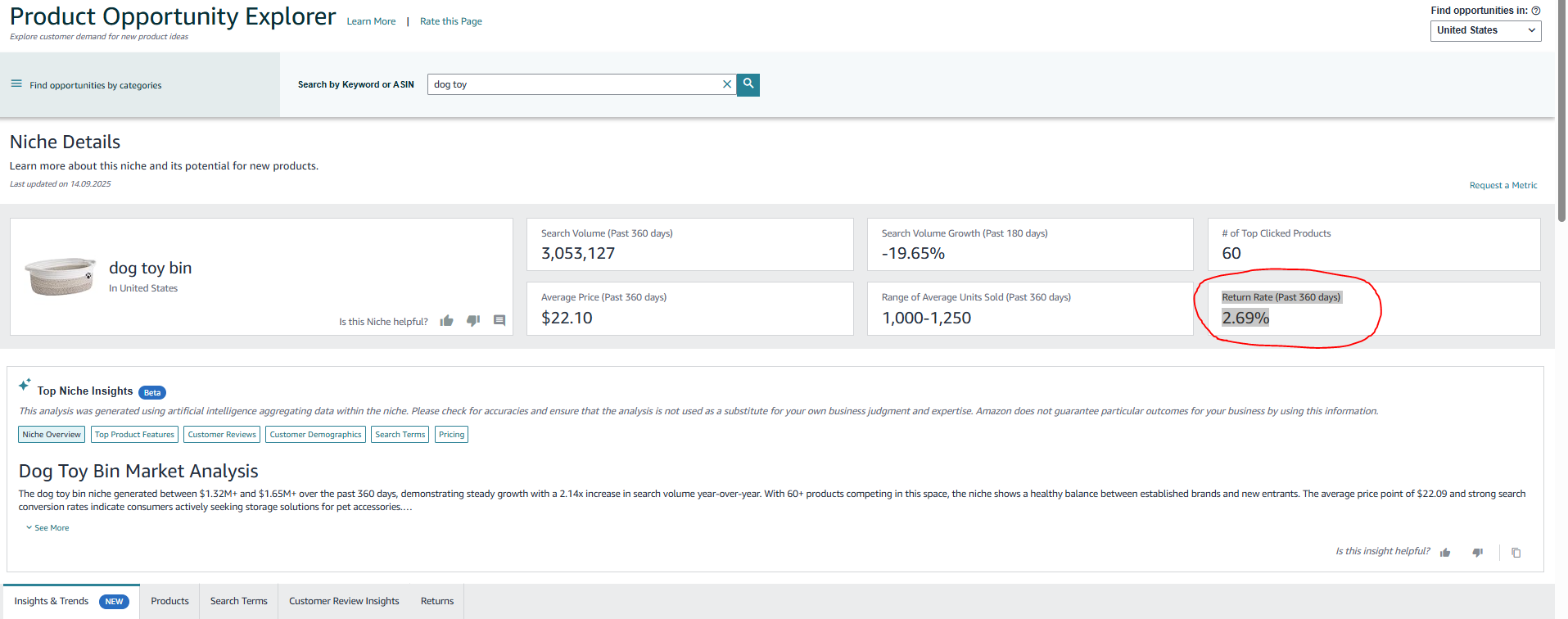
A complete financial plan with validated assumptions. A clear GO or NO-GO decision based on numbers. You know exactly how much you need to invest, when you break even, and what your monthly profit will be.
You have the system. You have the tools. You have the spreadsheets. You can start doing product research on your own today.
But every product is different. Every niche has hidden traps. And when you're investing $10K to $15K of your own money, "I think this is right" is a scary place to be.
Your first product is live on Amazon. You're making real sales. Month 3, you hit breakeven. Month 5, you're bringing in $3,000+ per month in profit.
You're not guessing anymore. Someone who has done this hundreds of times is reviewing your product, your numbers, your supplier, your listing. Every decision is validated before you spend a dollar.
This system gave you the framework. If you want someone who has built 8 figures on Amazon to personally review your product, your numbers, and your strategy before you invest, RISE Mentorship exists for exactly that.
Learn More About RISE →